
Quick Take
The DJI Pocket 3 takes a microSD card up to 1TB, and the only rating that matters is V30 (U3). The best SD card for the DJI Pocket 3 for most people is the SanDisk Extreme PRO 256GB — and because the camera has a UHS-I slot, a $100 V90 card records no faster than a $30 one.
There is a strange gap between what people spend on a Pocket 3 and what they put inside it. A camera that shoots 4K120 gets fed whatever card was cheapest in a marketplace listing, and then the card too slow warning shows up in the middle of a shoot — or worse, the footage simply isn’t there when you get home. Choosing the best SD card for the DJI Pocket 3 takes about two minutes, and the rules are far simpler than the spec sheets make them look. Here’s what actually matters.

What the Pocket 3 Actually Needs
Three things, and that’s the whole list. It takes a microSD card, not a full-size SD. It needs a V30 rating, which on some cards is printed instead as U3 — look for a 3 sitting inside a small U symbol, or a 30 next to a V. And it accepts capacities up to 1TB, which is worth saying clearly because a lot of older guides still repeat a 512GB ceiling that no longer applies.
The big number printed across the front of the card is the part that misleads almost everyone. That figure is read speed — how fast files copy to your computer afterwards. Recording depends on sustained write speed, and that is exactly what the V rating describes. A V30 card sustains around 30MB/s, which comfortably covers everything the Pocket 3 can record, including 4K120.
Best SD Card for DJI Pocket 3: My Picks
SanDisk Extreme PRO — the safe answer
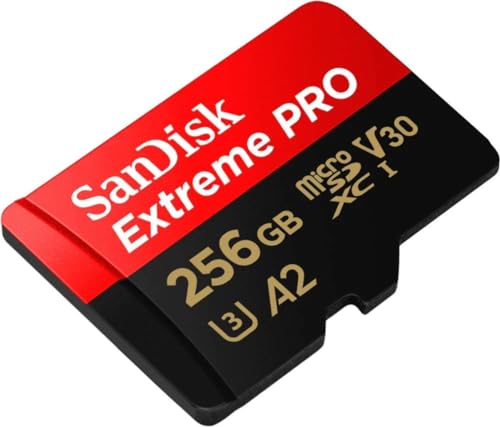
- Waterproof, shock and vibration proof, protected from airport x-rays, temperature...
It sits on DJI’s own recommended list, it holds its write speed when the camera gets warm, and it has never given me a dropped-frame warning. If you want to stop thinking about this decision, buy this one.
SanDisk Extreme (245MB/s) — same recording class, much faster offload
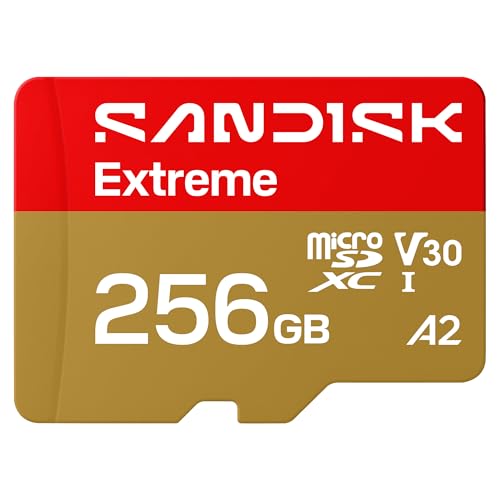
- CAPTURE LARGER THAN LIFE. Unlock startling 5K[3] point-of-view and pristine high-res...
- SPEED BARRIERS SHATTERED. Save precious moments with rapid read speeds up to...
- MAXIMIZE WITH MASSIVE CAPACITY. Record longer and store more with up to 2TB[1] of...

This is the card I reach for most. It records identically to the PRO but empties onto a computer noticeably faster, which matters more than people expect after a long shooting day.
Samsung EVO Select — the budget spare
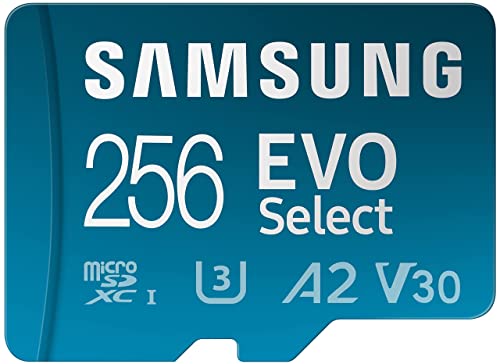
- ALL THE SPACE YOU NEED: Store tons of media on your phone, load games or download...
- FAST AND SMOOTH: With superfast U3, class 10 rated transfer speeds of up to...
- EXPAND AND STORE BIG: Find your perfect fit from 64GB, 128GB, 256GB and 512GB; Select...
At 128GB and above it meets the same V30 spec, and a cheap second card in the bag beats a fast card that’s full. One caution: it’s among the most counterfeited cards in existence, so buy it from a seller you trust.
Lexar Professional 1066x — the solid alternative
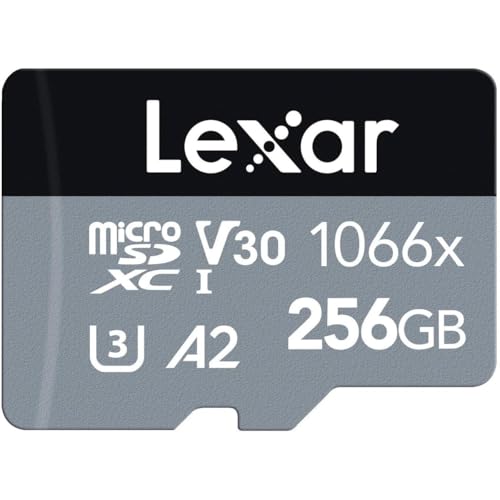
- Professional-level performance for action cameras, drones, Android smartphones...
- Leverages UHS-I technology to deliver read speeds up to 160MB/s
- Quickly capture high-quality images and extended lengths of Full-HD and 4K UHD with...
A true V30/A2 card and a sensible pick if SanDisk pricing is having a bad week. If you shoot on more than one camera, the same shortlist carries across everything else in the bag — I go deeper on that in my guide to the best SD cards for action cameras.
Why a V90 Card Is Wasted Money Here
This is the mistake that costs the most. Premium UHS-II cards, the V90 ones, run north of $100, and faster surely has to be better. The Pocket 3, though, has a UHS-I slot. A UHS-II card will still work — it’s backwards compatible — but it physically cannot record any faster than a good UHS-I card in this camera. All that extra speed does exactly one thing: it moves files to your computer more quickly once you’re already done shooting. For recording, a $30 card does the same job.
How Much Footage Fits
A 256GB card holds roughly four and a half hours of 4K — a full travel day for most people. A 512GB card roughly doubles that, so around nine hours. Push into higher frame rates or shoot in D-Log and the files grow, so those numbers drop.
My own preference is two 256GB cards rather than one 512GB. If a card ever fails or corrupts, half the trip survives instead of none of it. Worth noting that the Pocket 3 has no internal storage to fall back on, unlike the newer models — the SD card guide for the Pocket 4 covers how that 107GB changes the maths.
Fake Cards and the “Card Not Compatible” Fix
Counterfeit microSD cards are a genuine problem, and the convincing ones carry real SanDisk or Samsung branding down to the print on the label. They report a capacity they don’t have and a speed they never reach, and you usually discover this at the worst possible moment. Stick to SanDisk, Lexar, Samsung or Kingston, buy from a seller with a real return policy, and treat a price that looks too good to be true as exactly that.
One more thing worth knowing, because it panics people unnecessarily. You put a brand-new card in, and the camera announces it isn’t compatible or is too slow. Nine times out of ten that card is fine — it just needs to be formatted inside the camera, in the settings menu, rather than on your computer. That sets it up the way the Pocket expects and clears the warning. It takes about five seconds.
FAQ
1TB. The 512GB ceiling repeated in a lot of older guides is outdated. That said, for most people 256GB or 512GB is the sweet spot — splitting a trip across two smaller cards limits the damage if one ever fails.
No. V30 covers everything the Pocket 3 records, including 4K120. V60 only becomes worth considering on the Pocket 4 and 4 Pro, which push higher bitrates and add 4K240 slow motion.
No — the Pocket 3 records only to a microSD card, so the camera is unusable without one. The Pocket 4 and 4 Pro added roughly 107GB of built-in storage, which acts as a safety net on the days you forget your card.
Usually not. Format it in the camera’s settings menu rather than on a computer, which writes the file system the way the Pocket expects. If the warning survives an in-camera format, then suspect the card itself, particularly if it came from an unfamiliar seller.
Yes. All three cameras use a microSD in a UHS-I slot with the same V30 minimum, so cards move freely between them. If you’re weighing up an upgrade, my DJI Pocket 4 vs Pocket 3 comparison goes through what actually changed.

