
Quick Take
If most of what you shoot is fairly still — talking to camera, quick clips for social — the iPhone 17 Pro is genuinely enough. The DJI Pocket 4 Pro earns its place the moment you move: a physical gimbal, self-tracking, and grading headroom the phone still can’t match. And if you don’t need the Pro’s zoom, the cheaper DJI Pocket 4 gets you that same gimbal advantage for less.
The iPhone 17 Pro shoots Apple Log, has a real 4x telephoto, and even records ProRes RAW — so the question is a fair one: if your phone already shoots amazing video, do you actually need a separate camera? I took both out to a lake and shot the same scenes side by side, and this DJI Pocket 4 Pro vs iPhone 17 Pro comparison ended up hinging on one difference that never shows up on a spec sheet. Here’s what I found.

Straight Out of Camera: Two Different Looks
Shooting both at the same time in the same scene, the difference shows up right away. The iPhone tends to brighten everything and make it pop straight out of the camera. The Pocket 4 Pro, with the bigger sensor on its wide lens, holds onto more detail in the tricky parts — bright reflections coming off the water against darker trees behind them.
That’s the dynamic range story. DJI claims up to 17 stops on the Pro’s wide camera. Apple doesn’t publish an official number, but from the tests I’ve seen, iPhone Log lands somewhere around 12 — so the Pocket gives you more room to pull back highlights and lift shadows when you grade. If you don’t grade and go straight to social, the iPhone’s look is honestly hard to beat. One more footage note: the Pocket shoots 4K at up to 240fps, double the iPhone’s 4K 120 — a big deal if you love slow motion.
Stabilization: The Gimbal Is Still Cheating
The first real difference has nothing to do with image quality. It’s movement. Walking, the iPhone’s mix of optical stabilization and software is smooth enough for most clips. But the moment you pick up the pace and run, it starts to struggle. The Pocket 4 Pro has an actual gimbal — a little motor physically holding the shot steady — so even running, it stays locked.
The Pocket can also lock onto you and follow you around on its own, which matters a lot if you film by yourself. I went deeper on the tracking in my full DJI Pocket 4 Pro review.
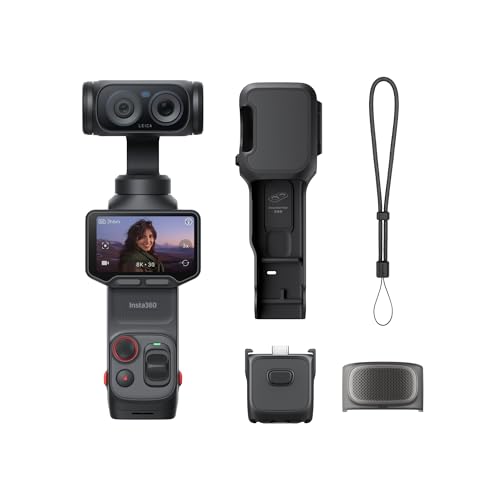
- SUPERIOR VIDEO QUALITY - Capture breathtaking footage with 8K resolution at 30 fps...
- EXTENDED BATTERY LIFE - Enjoy up to 4 hours of continuous recording with the dual...
- ENHANCED STABILITY - Benefit from advanced Digital Image Stabilization, delivering...
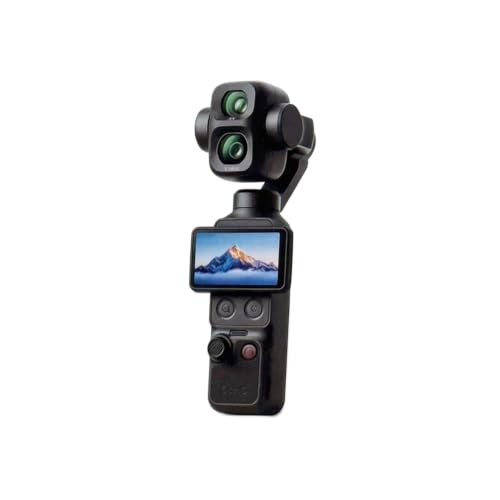
- Revolutionary Dual-Camera System & Zoom: Experience unmatched versatility with the...
- Cinematic 4K Ultra-Slow Motion & 10-Bit Color: Elevate your videography with...
- ActiveTrack 8.0 & 3-Axis Stabilization: Say goodbye to shaky footage. The integrated...
Zoom: The iPhone Actually Reaches Further
Both of these finally have a real telephoto. The iPhone starts on its main lens, jumps to a 4x optical telephoto around 100mm, pushes to 8x at near-optical quality, and goes fully digital up to 40x. The Pocket 4 Pro switches to a dedicated 3x optical telephoto around 60mm and reaches up to 12x with digital zoom.
So on paper the iPhone reaches further at high quality. But past those optical limits, both get softer and noisier — and the iPhone’s long digital zoom gets shaky fast. The Pocket’s zoom sits on that gimbal, so even at the far end it stays much steadier. Most of the time, I’d rather have the steadier shot than the closer one.
Audio and Low Light
For casual videos and vlogs, both cameras sound excellent without a microphone — the Pocket picks up voice clearly with its three built-in mics, and the iPhone holds its own. If you want the cleanest sound, or you want to walk away from the camera and still be heard, a wireless mic is the real answer for either one.
Low light is where I expected the biggest gap. The iPhone’s night processing is impressive — it brightens the scene and cleans up noise automatically. The Pocket handles it differently, leaning on the bigger sensor, so motion looks more natural and less processed — but you have to be a little more careful with your settings.
Price and Availability
The iPhone 17 Pro is easy: $1,099 for the base 256GB model, buyable today. The Pocket 4 Pro is out in Asia now, but in the US it will arrive as the rebranded Xtra Muse 2 Pro — currently reservation-only early access, expected to land around the $700 mark when it ships. Keep that price gap in mind for everything that follows.
DJI Pocket 4 Pro vs iPhone 17 Pro: Do You Actually Need Both?
If most of what you shoot is fairly still and you don’t want to carry a second device, your phone is enough — and the iPhone has one advantage the Pocket can’t match: the footage is already on the device, ready to edit and post in seconds.
But if you move while you film — walking, traveling, vlogging, riding — that gimbal is the reason to grab the Pocket. Same if you film yourself and want the camera tracking you, or you grade your footage and want the flexibility. There’s a practical side too: your phone is also what you need for calls and messages, so tying it up recording all day drains it in both senses. With over 100GB of storage built in, the Pocket keeps your phone free and charged for everything else.
Personally? The iPhone stays my everyday camera because it’s always on me. The moment I’m actually heading out to shoot something, I reach for the Pocket. They’re not really competing — one’s always in your pocket, the other’s the one you bring on purpose. I reached the same conclusion years ago comparing GoPro vs iPhone for travel and vlogging — the answer depends on how you shoot, not on the spec sheet.
Do I need a pocket camera if I have an iPhone 17 Pro?
For mostly-static shooting and quick social clips, no — the iPhone 17 Pro is enough. A pocket camera like the DJI Pocket 4 Pro makes sense if you film while moving, film yourself solo, or want to keep your phone free and charged while you shoot.
Which has better zoom, the DJI Pocket 4 Pro or the iPhone 17 Pro?
The iPhone reaches further at high quality — 4x optical pushing to 8x near-optical, versus the Pocket’s 3x optical. But at long zoom the Pocket stays much steadier because its lens sits on a physical gimbal, and steady footage usually looks better than closer-but-shaky footage.
Is the DJI Pocket 4 Pro better than the iPhone 17 Pro in low light?
They’re different rather than one being clearly better. The iPhone brightens and denoises automatically for a cleaner instant result, while the Pocket leans on its larger wide-lens sensor for a more natural look — but it rewards more careful manual settings.
Which is better for slow motion?
The Pocket 4 Pro shoots 4K at up to 240fps, while the iPhone 17 Pro tops out at 4K 120fps — so the Pocket gives you double the slow-motion room in 4K.
Can you buy the DJI Pocket 4 Pro in the US?
Not under DJI’s own name yet. It’s set to arrive in the US as the rebranded Xtra Muse 2 Pro, currently in reservation-only early access and expected around the $700 mark when it ships.


