
Quick Take
In the DJI Action 6 vs GoPro Mission 1 Pro matchup, get the GoPro Mission 1 Pro if you film fast action at 4K 240fps or grade your footage, since it holds more detail in daylight. The catch is that it costs about $260 more outside of sales. For travel, vlogging and mixed light, the DJI Action 6 is the smarter buy: it’s lighter and has about 50GB of storage built in.
GoPro doesn’t even call the Mission 1 Pro an action camera. It calls it a cinema camera, and it costs about $260 more than the DJI Action 6 outside of sales. You’d expect that money to win everywhere. It doesn’t, and the biggest surprise comes after dark. I shoot with the Action 6 myself, and this DJI Action 6 vs GoPro Mission 1 Pro comparison shows where the extra cost pays off. Here’s where the money goes.
Design, Weight and Storage
| DJI Action 6 | GoPro Mission 1 Pro | |
|---|---|---|
| Sensor | 1/1.1-inch | 1-inch |
| Aperture | f/2.0 to f/4.0 (variable) | f/2.8 (fixed) |
| Top resolution | 8K at 30fps (via update) | 8K at 60fps |
| Slow motion | 4K at 120fps, 1080p at 240fps | 4K at 240fps, 1080p at 960fps (short bursts) |
| Max bitrate | 120Mbps | 240Mbps |
| Weight | 149g | About 207g |
| Waterproof (no case) | 20m | 20m |
| Built-in storage | About 50GB + microSD | None (microSD only) |
| Microphones | 3 | 4, with 32-bit float |
| Rated battery (longest mode) | About 4 hours | About 5 hours |
| Price outside of sales (US / Europe) | Around $435 / about €370 | $699.99 / €699 |
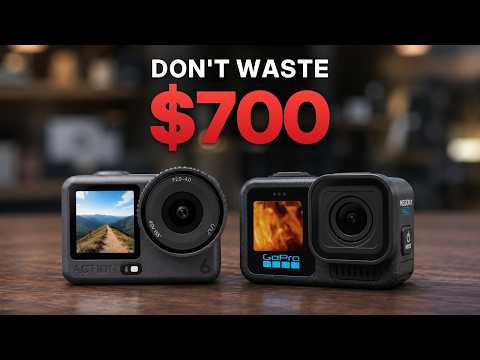
The Action 6 is DJI’s latest action camera, with touchscreens on the front and back and mounts that snap on magnetically. I’ve had mine out in the rain, snow and cold, and it’s never given me a problem.
The Mission 1 Pro is bigger and heavier. It keeps GoPro’s folding mounting fingers, so your old mounts still work, and its new Enduro 2 battery also fits the Hero 13. New to GoPro’s Mission lineup? Here’s the GoPro Mission cameras explained.
Those extra 60 grams or so matter on a helmet or a chest mount over a full day. The bigger difference is storage: the Action 6 has about 50GB built in plus a microSD slot, while the GoPro has none at all and can’t record without a card. I’ve missed shots before just because I didn’t have a card with me, so for me that’s a big deal.
Daylight Video Quality
Good light is where the GoPro earns its price. It gives you more detail, holds on to more of the sky and the shadows, and records at up to 240Mbps, double the Action 6. The DJI processes its image more and looks brighter and sharper straight out of the camera, which some people prefer if they post right away.
Both shoot 10-bit log (D-Log M on the DJI, GP-Log 2 on the GoPro). For bigger projects I usually grab the Action 6, because its D-Log M footage matches my DJI Pocket and my drone. On a phone screen the daylight gap is small, but if you grade your footage or watch it on a big screen, the GoPro is ahead.
Slow Motion and Stabilization
Slow motion is where the GoPro really pulls away. Its 4K at 240fps slows down eight times on a normal 30fps timeline, and it even does 1080p at 960fps in short bursts of about 10 seconds. If you ride, surf, skate or film anything fast, that’s a real reason to pick it.
The Action 6 tops out at 4K at 120fps. A free update in December 2025 added 8K at 30fps for cropping in later. Stabilization is much closer, with both staying smooth when you run or ride. On the Action 6, there’s also a mode that keeps the horizon level even if the camera rolls all the way around, and I’ve noticed it most on uneven walking shots.
Low Light and Night Video
You’d expect the GoPro to win at night, since a bigger sensor takes in more light. But the sensors are close in size, and the Action 6’s f/2.0 lens lets in about twice as much light as the GoPro’s fixed f/2.8. In real night footage, neither camera clearly beats the other.
On my Action 6, low light is better than I expected from an action camera, but when it gets really dark it does get noisy, so I wouldn’t buy either one just for night footage. My DJI Action 6 review covers that camera on its own.
The variable aperture helps in harsh sun too. The Action 6 closes down to f/4 and I don’t need ND filters, while with the GoPro’s fixed lens you’d usually add them to keep a smooth, natural motion blur.
Battery Life and Overheating
GoPro rates its bigger battery at up to about 5 hours in its longest mode, against about 4 hours for the Action 6. In real use that gap doesn’t always show, and I’ve had full days out with my Action 6 where I never once had to think about the battery.
Heat is where the GoPro needs more care. In its most demanding modes it can stop to cool down when it’s sitting still, though with air moving over it, like on a bike, that happens a lot less. Short slow-motion clips are fine, but I wouldn’t plan long recordings in those modes, especially in the heat out here in Asia.
Audio and Close Focus
The audio specs favor the GoPro, with four mics and 32-bit float audio, which makes it much harder for loud sounds to distort. The Action 6 has three mics and connects straight to DJI’s wireless mics with no receiver, so if you already have a DJI Mic, like my Mic 2, you’re set. On windy hikes, even its built-in audio was usable for me.
If you vlog, keep in mind that the GoPro can’t focus closer than about 60cm (around 2 feet). Hold it close to your face and you can come out a bit soft, while the DJI focuses a lot closer.
Price and US Availability
The Mission 1 Pro’s full price is $699.99 (€699 in Europe), or $599.99 if you sign up for GoPro’s yearly subscription, which starts at about $60 a year. The Action 6 usually sells for around $435 in the US and about €370 in Europe. That makes the GoPro roughly $260 more outside of sales, or over €300.
The GoPro also needs a fast memory card, and here’s the best SD card for the GoPro Mission 1. Prices usually drop around Black Friday and the Christmas holidays, so check the current price on both before you buy.
In the US, DJI didn’t sell the Action 6 through its own store at launch, but its new US online store has it now, and the GoPro is in most stores. For the background, here’s the DJI ban in the USA explained.
One more thing: in September 2026, GoPro agreed to a merger deal with Starman Optical. As of mid-November it hadn’t closed, and GoPro says it will keep supporting its cameras and the subscription.
DJI Action 6 vs GoPro Mission 1 Pro: Which Should You Buy?
Get the Mission 1 Pro if slow motion is a big part of what you film, like surfing, biking or skating, or if you grade your footage and want the most detail in daylight. And in the US, it’s the easier camera to get. Coming from a Hero 13? See my GoPro Mission 1 Pro vs Hero 13 comparison.
Get the Action 6 if you mostly travel, vlog or film in mixed light. It’s lighter and has storage built in. Its wider aperture lets in more light at night and helps in harsh sun, and outside of sales it costs about $260 less.
If you already shoot with a DJI Pocket or a DJI drone, the Action 6 footage just fits with the rest of your clips.
It really comes down to how often you’d use those extra frame rates. If I were buying today, I’d stick with the Action 6, unless I needed the slow motion. DJI’s Action 7 could be next, and I’ve covered whether you should wait for the DJI Osmo Action 7.
Is the GoPro Mission 1 Pro better than the DJI Action 6?
Not across the board. The Mission 1 Pro wins on daylight detail, bitrate, slow motion and audio specs. The DJI Osmo Action 6 is lighter (149g vs about 207g), has about 50GB of built-in storage, focuses much closer and costs about $260 less outside of sales. At night, neither camera clearly beats the other.
Is the GoPro Mission 1 Pro better in low light than the DJI Action 6?
Not clearly. Its 1-inch sensor is only slightly bigger than the Action 6’s 1/1.1-inch sensor, and the Action 6’s f/2.0 lens lets in about twice as much light as the GoPro’s fixed f/2.8. In real night footage, neither one clearly wins.
Does the GoPro Mission 1 Pro have internal storage?
No. The Mission 1 Pro records only to a microSD card, so it can’t record without one. The DJI Action 6 has about 50GB of storage built in, plus a microSD slot.
Does the GoPro Mission 1 Pro overheat?
It can in its most demanding modes, like 4K at 240fps, when it’s sitting still. With air moving over it, for example on a bike, that happens a lot less. Short slow-motion clips are fine, but long recordings in those modes are risky in hot weather.
How much more does the Mission 1 Pro cost than the Action 6?
Outside of sales, about $260 more in the US, or over €300 more in Europe. The Mission 1 Pro’s full price is $699.99 or €699 ($599.99 with GoPro’s yearly subscription), while the DJI Action 6 usually sells for around $435 or about €370. Prices often drop around Black Friday and the holidays, so check the current price.
DJI Action 6 vs GoPro Mission 1 Pro: Gear Mentioned
DJI Osmo Action 6: check the current price on Amazon
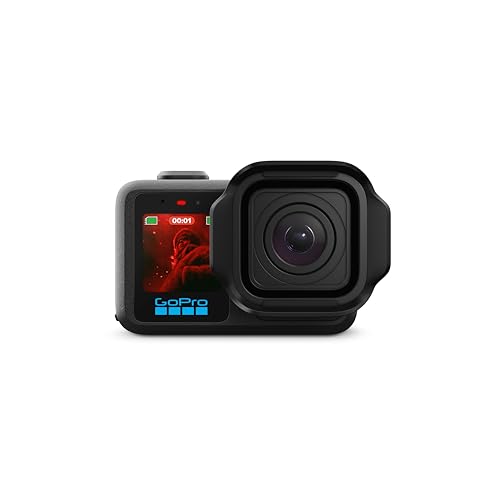
- 1” Sensor + Advanced Low-Light Performance: MISSION 1 PRO utilizes a 1” sensor...
- Best-in-Class Video With 8K Open Gate: 8K video delivers breathtaking image quality...
- Over 3 Hours of 4K Runtime + Faster Charging: The all-new 2150mAh Enduro 2 battery...

